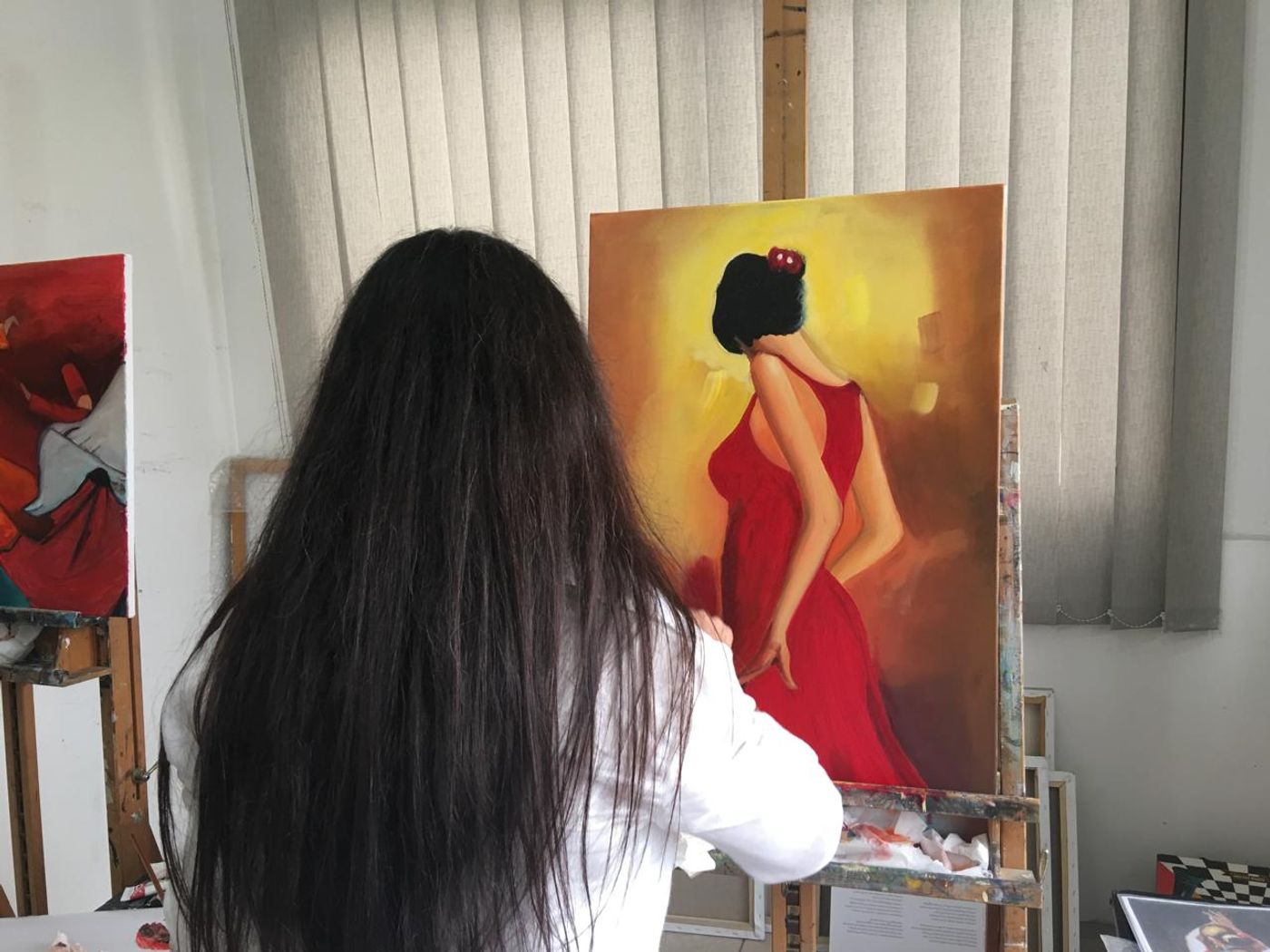
There is a particular kind of silence that happens when you paint. Not the silence of emptiness, but the silence of complete presence. The mind quiets. Time bends. The internal noise that follows most of us through the day simply stops.
This is not coincidence or imagination. It is neuroscience. And for those of us who paint, it may be one of the most powerful forms of self-care we have access to.
The Science of Being Fully Present
Psychologist Mihaly Csikszentmihalyi spent decades studying why certain activities produce states of deep fulfillment. What he found, through decades of research, is that the experience people describe during painting, total absorption, loss of self-consciousness, distorted sense of time, is a psychological state he called Flow.
Csikszentmihalyi described flow as "a state in which people are so involved in an activity that nothing else seems to matter; the experience is so enjoyable that people will continue to do it even at great cost, for the sheer sake of doing it."
His early research began precisely with artists and painters. What he noticed was that they would finish a work, put it against the wall, and immediately start a new one. They were not interested in the finished painting. What they were after was the experience of full immersion in the act of creation itself.
Flow is linked to high performance, wellbeing, and positive development. The theory can be applied across psychology, neuroscience, education, and organizational behavior, offering insights into achieving deep focus and reducing anxiety in a world of endless distractions.
Painting is one of the most reliable gateways to this state. The challenge of mixing color, reading light, deciding what to include or leave out, keeps the mind engaged at exactly the right level of stimulation. Not bored. Not overwhelmed. Present.
What Happens to the Body When You Paint
The benefits of painting extend beyond the psychological. They are measurable in the body.
A study conducted at Drexel University found that participants experienced a notable decrease in cortisol levels, the hormone associated with stress, after just 45 minutes of creative activity.
Participants in art-making research reported feeling more relaxed, focused, and emotionally balanced after engaging in artistic expression. Researchers concluded that artistic expression holds promise as a powerful tool for promoting emotional resilience, reducing stress, and enhancing self-awareness.
Art therapy has been linked to improved self-awareness, social connection, and emotional regulation, while lowering levels of distress, anxiety, and even pain scores. These are not subjective impressions. They are outcomes documented in clinical and research settings across diverse populations.
Painting as a Language for the Inner World
One of the most underappreciated things about painting is what it allows us to say without words. Many of our most important inner experiences, grief, confusion, longing, quiet joy, do not translate easily into language. They resist articulation. But they can move through a brush.
Research shows that art therapy can significantly promote emotional regulation, improve cognitive function, and develop self-identity, especially in alleviating emotional disorders such as anxiety and depression.
Expressing emotions through art can help individuals reframe negative experiences and develop healthier coping mechanisms. Creative expression provides a non-verbal outlet for self-expression, helping individuals process complex emotions, and stimulates positive neurochemical responses including dopamine release.
For many people, a painting session becomes a form of self-inquiry. What colors are you drawn to today? What shapes feel right? What are you trying to say that you have not yet found words for? The canvas does not judge. It simply receives.
You Do Not Have to Be an Artist
Perhaps the most important thing to know is this: the research does not distinguish between skilled painters and beginners when it comes to wellbeing outcomes. The benefits belong to the process, not the product.
Pick up a brush. Do not aim for beauty. Aim for honesty. Let the painting tell you something about yourself you did not already know.
That is where the real discovery begins.